

Tiny Memoir: #003
It is so hard to awaken. Sometimes it takes a child to see the terror clearly.


In case you missed the premise of my bonkers apocalyptic memoir, it’s here. Youth! AIDS! Punk rock! Love! Christian Nationalism! Sex! Resistance!
This is the third in an ongoing series of Tiny Memoirs. (The first two are here and here.) It’s an area of interest for me, obviously, as I’m flogging a memoir in a time when every lit agent on Planet Earth says “memoir is hard.” Ooooookay, Agentbot. Also life is hard. To quote myself (quoting DFW):
David Foster Wallace spoke to Elle Magazine about writing as “one of the few experiences where loneliness can be both confronted and relieved.” He filled out his list with poetry, music, sex, and religion. I’d go further and say that writing — memoir in particular — not only attenuates loneliness but brings us compatriots in the struggle. There is meaning in a shared labor. Think about comrades who survived a war, or even high school.
These are weird times. Memoirs — sharing a personal struggle — give us courage.
(Start your Tiny Memoir here, by following a few prompts.)
Anonymity is always an option in publishing these Tiny Memoirs. Since this week’s involves sensitive matters, real names and identifying details have been changed.
“You Saved Me First”
By Sarah (let’s call her)
As a young woman, I embraced an extreme form of Evangelicalism. The kind that favors the authority of men. The kind where husbands have absolute dominance over their wives, who are expected to be unquestioningly submissive. Anyone who has sex outside of marriage faces eternal damnation. Divorce falls somewhere between unmarried sex and murder on the sin spectrum. Though the word “mercy” is thrown around, the God I had been taught to worship was not particularly merciful. The Southern Baptist party line, not the example of Christ, was the authority.
I graduated college in 1993 with a plan to pursue a career in secondary education. I wanted to teach high school English. That fall, while working as a substitute teacher, I suffered an extreme exacerbation of a movement disorder I’ve had since childhood—involuntary repetitive muscle contractions, first in my right arm and then in my left, to the point of dislocation. After eight months of this hell, I underwent a stereotactic thalamontomy—an 18-hour brain surgery during which a surgeon drilled holes in my skull then cauterized parts of my brain. I was awake during the procedure. I had to be. To insure the surgeon hadn’t inadvertently destroyed my speech and memory centers, I recited Bible verses throughout the procedure.
Turns out a movement disorder isn’t particularly conducive to dating. Or much of a boost to self-esteem—mine was in the toilet. Romantic relationships had always been a struggle. (I had an impressive, unwitting, run as a beard for closeted college guys.) Now, with a neurological condition, it was tough to imagine myself as at all desirable to men.
Enter Matt. We met in the months following my beloved grandfather’s death (another blow to my state of mind). I would list his attractive qualities, but they barely registered. He seemed like my best (only?) chance at a long-term relationship. That need to be needed induces a color blindness. I could no longer see red flags. So I took the shot.
When, on our wedding night, he couldn’t perform, Matt claimed it was my fault. My movement disorder made my muscles too tight, he said. He said nothing about how his internet porn addiction may have contributed. When he then floated the idea of an annulment, he confessed he had only married me to have sex without fear of eternal damnation. But the dread of divorce, the sin of it, overwhelmed me. Soon enough, this spiritual oppression subsumed the young me who had once been bright, witty, a college graduate, a Christian.
I just swallowed his abuse and let myself be re-created in his image of what a good little wife should be. I ate only what he allowed. I thought only what he thought.
We had moved to Missouri—capital of oppressed women and Nirvana for their abusers. Matt slept with a semi-automatic rifle under our bed.
Then I got pregnant.
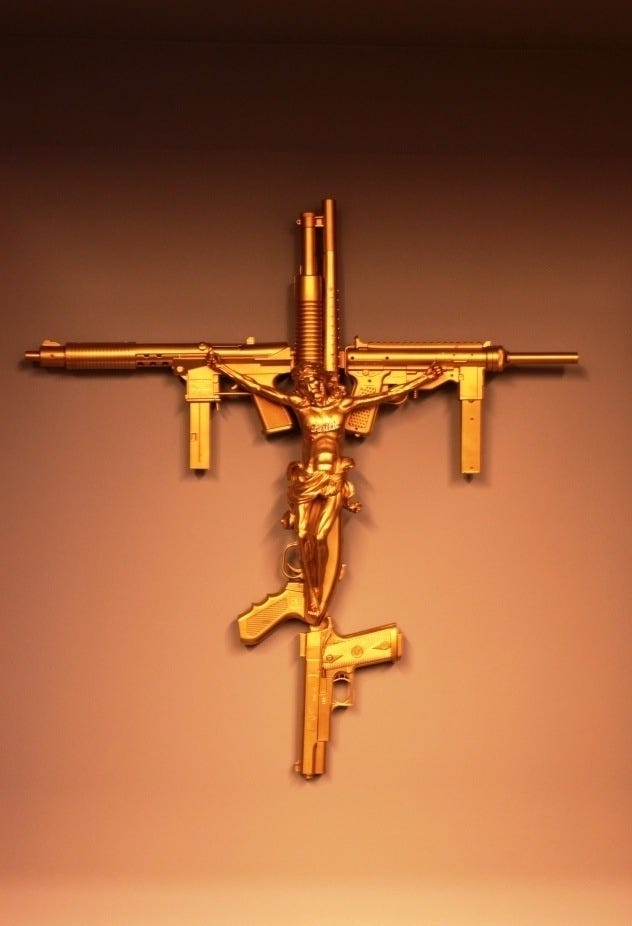
By the time I went into labor, Matt’s behavior had become increasingly bizarre. My delivery nurse had to intervene as Matt carried on strangely. By happy coincidence, she was the wife of our police chief and recognized the signs of my situation. If things got bad, she whispered, we could shelter in her home. I tucked away her number.
Something in me stirred—my former self, long suppressed. A person who might herself succumb to abuse but sure as shit would refuse to subject her child to those horrors. I may not have loved myself enough to fight back, but I loved her enough. I’d go balls-to-the-wall to spare her the hell I was living.
I knew I had to resurrect the old clever me and quietly prepare. But Matt noticed I was not the submissive mouse I had been. He couldn’t control me in the same way. I suggested couples’ therapy. He claimed, of course, that I was the problem, not him. He said if I wanted couples’ therapy, he’d have to hear it from our pastor—whom he summoned to our house on a mission to “get my wife to submit.”
At that point, Matt’s behavior had become so erratic that I maneuvered through my days afraid to be separated from my daughter. I discovered Matt and his mother were scheming to have me committed to psychiatric care for “post-partum psychosis,” leaving our daughter in their hands.
I holed up in the guest room on the pretext of phoning my dad, who was planning to visit the following week. Whenever Matt was in earshot, I coded my concerns about him as complaints about my daughter’s fussiness. My dad heard my alarm and called my mom. Though divorced themselves, my parents united in their determination to save their daughter and first grandchild.
Our baby was 20 days old. It was a Monday. After Matt left for work, in a last-ditch effort, I called our pastor. I pleaded with him to encourage Matt to join me in therapy. Our pastor listened calmly, then dropped a bomb. “Your husband is a very sick man,” he told me, “and he’s not going to get better. For the last few hours, I’ve been on the phone with your mother. She and your dad are ten minutes away. When they get to you, you need to pack up that baby and leave with them. The police chief has already confirmed you can legally go.”
Rather than hew to Southern Baptist dogma, which firmly backs male dominance over women, our pastor went against type to follow the example of Christ. I assessed the obstacles: single mom – with a newborn – and a disability. It wouldn’t be easy for either of us. But we could survive... unless Matt and his rifle caught wind.
When my parents arrived, I briefly introduced my father to his granddaughter, then instructed them to pack up her dresser. An hour later, we were on the road to New Hampshire. I took only the clothes I was wearing, my daughter’s things, and the van I co-owned with Matt.
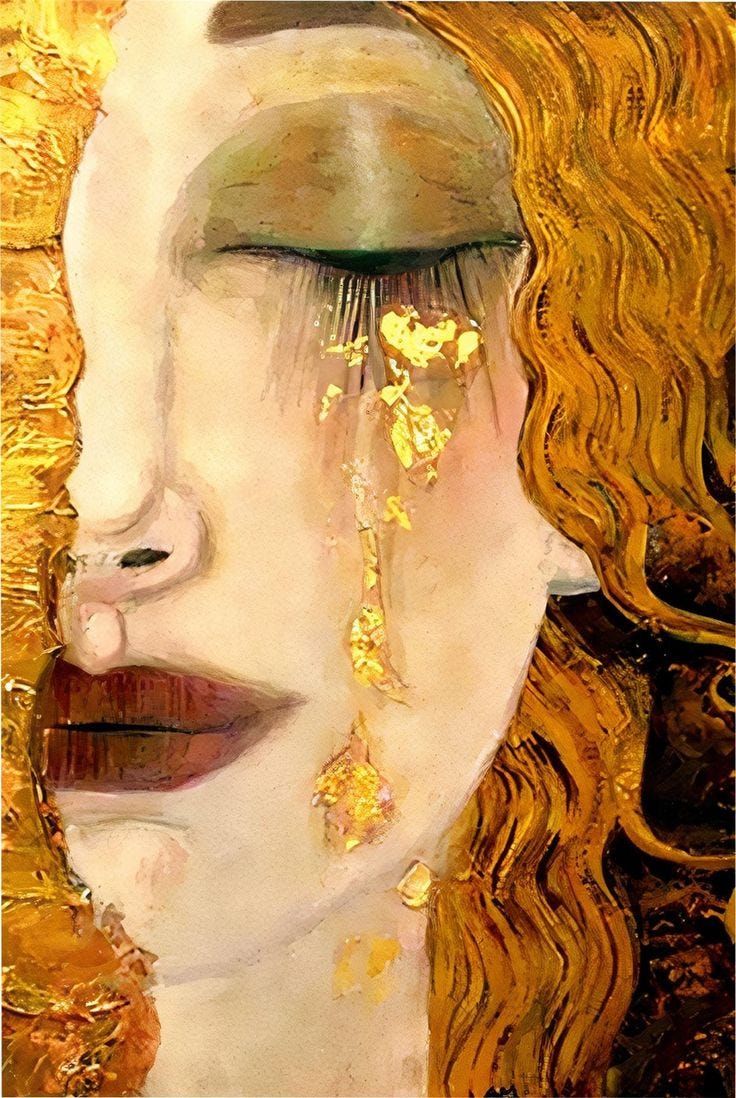
When we arrived in New Hampshire, I focused on my daughter’s care so the horror of my situation couldn’t penetrate. I could never have imagined her first weeks would go this way. Contrary to my fears, Matt didn’t come after us. We talked on the phone but he made clear the only acceptable solution would be my return to Missouri, to live with him, and be treated for post-partum depression—a malady multiple doctors had confirmed I did not suffer. Driven by a need to process all I’d endured, I saw a Christian counselor—huge mistake. He advised that a return to my husband would be a perfectly valid course.
Over time, it became clear that Matt was not invested in being a father or an effective co-parent. I filed for divorce, along with full custody of my daughter, in New Hampshire, on the first day it was legally permissible. Matt countered by filing in Missouri, demanding full custody of a child he barely knew and was unable to care for. If his suit succeeded, I would be allowed only supervised visitation, in his parents’ home.
Our pastor traveled from Missouri to testify on my behalf. He explained that I was the least-depressed person he’d ever encountered. Matt had been deemed a potential threat to our child by a psychological evaluation. Our pastor confirmed that assessment. The judge asked what steps I’d taken to encourage a relationship between my daughter and her father. In fact, I had invited Matt to spend time with our daughter in my presence, so she could follow my cues and get comfortable with him. The judge granted Matt visitation rights—under my supervision.
He never exercised those rights.
I began to build a new life for my daughter and myself. We put down roots in a community. I started a mom’s group. I led her Girl Scout troop. I joined the PTA. Early in my daughter’s life, I deconstructed my own extreme evangelicalism. I discovered a new picture of God, one who believes in mercy. That’s the God I taught my daughter about.
I was careful never to speak ill of my former husband around my daughter. I didn’t want to create any ambivalence in her of where she’d come from. But as she grew up, she began to ask questions. Early on I’d offer commonalities. “He loves hot tea and green beans, just like you do.” In time, she wanted more. “Your dad was not healthy enough to make good choices, so we had to live apart from him.” When she became a teenager, I provided a fuller history. She looked at me incredulously and said, “Mom, you saved me.” I smiled back. “You actually saved me first.”
I had been divorced for five years when a letter from a coroner’s office arrived. It was. Matt had died from a series of heart attacks and strokes.
My daughter is now a college graduate, living away from home but excelling in her first job. She’s in a solid long-term relationship. She is more than I ever dreamed she would be. We talk daily. She’s the daughter of a single mother. And for her, it’s not the scarlet letter my former self might have imagined it to be, but instead a source of pride and a driver of her own success.
It is an acknowledgement of the memoirist’s bravery to press LIKE. And RESTACK. And SHARE. Thanks!
Beautifully done 🫶
I love the honesty and strength presented here and how angels can arrive to us in unexpected places. Love is all a baby needs. I can confirm , I was better off when my mom wasn’t dating abusive men when I was growing up.